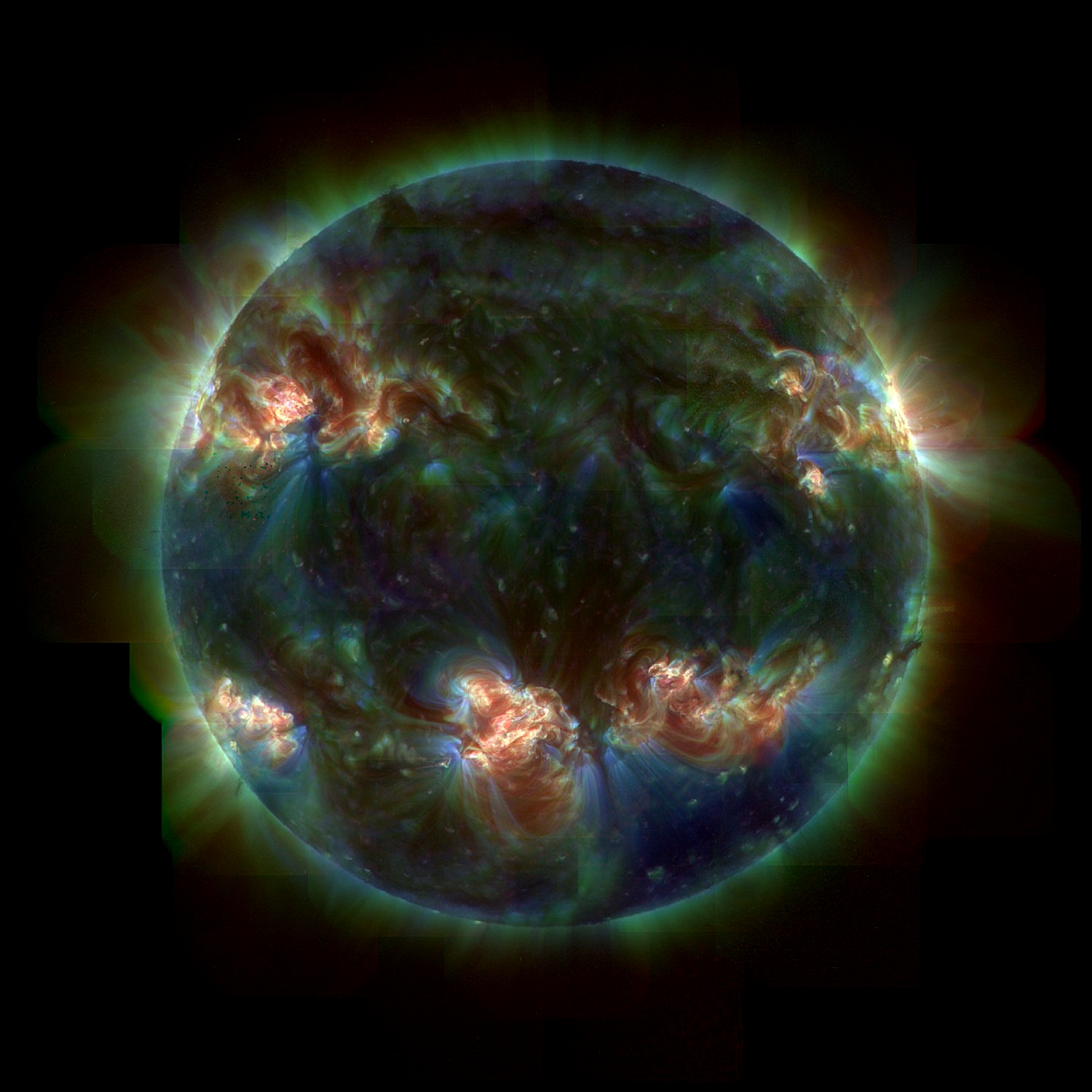
At a distance of about eight light-minutes, the most frequently studied star is the Sun, a typical main-sequence dwarf star ofstellar class G2 V, and about 4.6 billion years (Gyr) old. The Sun is not considered a variable star, but it does undergo periodic changes in activity known as the sunspot cycle. This is an 11-year fluctuation in sunspot numbers. Sunspots are regions of lower-than- average temperatures that are associated with intense magnetic activity.
The Sun has steadily increased in luminosity over the course of its life, increasing by 40% since it first became a main-sequence star. The Sun has also undergone periodic changes in luminosity that can have a significant impact on the Earth. The Maunder minimum, for example, is believed to have caused the Little Ice Age phenomenon during the Middle Ages.
The visible outer surface of the Sun is called the photosphere. Above this layer is a thin region known as thechromosphere. This is surrounded by a transition region of rapidly increasing temperatures, and finally by the super-heatedcorona.
0 Comments